
written by Jelisaveta Krstivojević
Within the IEEE PES ISGT Europe 2025 Conference, held in Valletta, Malta, the program featured a special session dedicated to the SUNRISE project, entitled Accelerating the Transition to Clean Power Systems Through Real-Time HIL Simulation. The session took place on October 20, 2025, and focused on the role of real-time and Hardware-in-the-Loop (HIL) simulation in the development, testing, and validation of modern power systems.
The special session brought together representatives from industry and academia, who presented different aspects of HIL simulation through concrete examples of its practical application. The session program included the following presentations:
- Juliano Grigulo, Product Manager and Applications Engineer, Typhoon HIL
Vendor’s Perspective on Real-Time HIL Simulation - Jelisaveta Krstivojević, Assistant Professor, University of Belgrade – School of Electrical Engineering
Introduction of the Perspective of a Newly Established Laboratory - Manuel Barragán-Villarejo, Associate Professor, University of Seville
Prototyping of a Voltage Source Converter Using Control HIL Simulation - Marene Larruskain, Associate Professor, University of the Basque Country (UPV/EHU)
Evaluation of the Performance of a Protection Relay Using HIL Simulation
The session was moderated by Full professor José M. Maza-Ortega from the University of Seville.
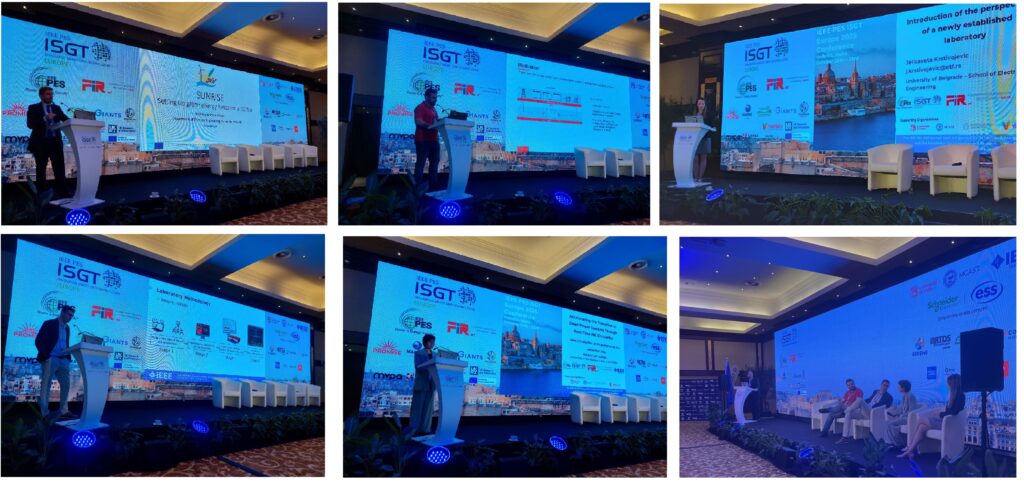
In my presentation, I focused on one of the central objectives of the SUNRISE project, the establishment of a modern real-time power system simulation laboratory at the School of Electrical Engineering, University of Belgrade. The presentation offered a perspective on how this objective was translated into a concrete and long-term sustainable outcome through the development of laboratory infrastructure and the systematic training of research and teaching staff. On a personal level, participating in the session was particularly meaningful, as I had the opportunity to represent the joint work of the team from the School of Electrical Engineering in Belgrade and the SUNRISE project as a whole.
My presentation addressed the phased development of the laboratory, from its initial setup within an existing laboratory space at the School of Electrical Engineering to its current location in the Palace of Science, where it is now integrated into the Smart Grid Laboratory and actively used for ongoing activities. I also emphasized the broader role of the laboratory in education, research, and collaboration, highlighting its evolution toward becoming a leading real-time power systems and microgrid laboratory in the Western Balkans, while supporting advanced research and cooperation with other institutions and industry.
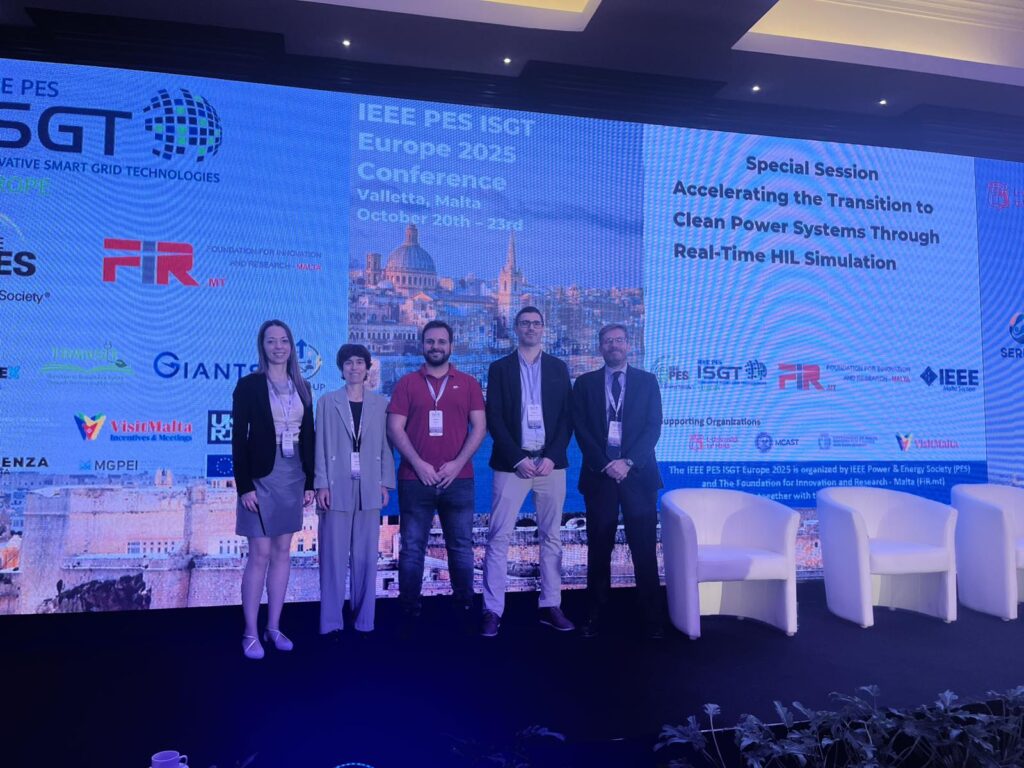
The special session concluded with a constructive discussion and a question-and-answer segment, during which participants exchanged views, shared experiences, and reflected on the presented approaches. This interaction further highlighted the relevance of the topics addressed and the value of open dialogue between different perspectives.
The conference IEEE PES ISGT Europe 2025 was not important only because of the sessions and presentations. Bringing together professors and researchers from different countries created a relaxed and stimulating atmosphere in which discussions about research naturally continued beyond the official program. Such moments often become the most valuable part of the conference experience.
Beyond the conference itself, I was genuinely fascinated by the beauty of Malta, its mild climate, and the strong presence of nature woven into everyday life. Valletta left a particularly strong impression on me, not only through its well-known landmarks, but through the character of the city as a whole. Walking through its streets, it felt as though every corner carried its own sense of history and aesthetic, far beyond what is typically highlighted in travel guides. Also, a visit to Mdina, with its stone architecture, and timeless atmosphere, offered a completely different rhythm and a sense of stepping outside of time.
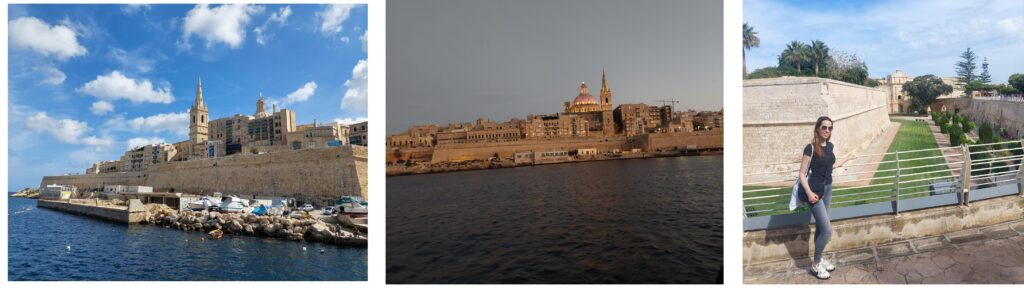
Overall, the visit to Malta was a valuable professional and personal experience. Presenting the work of the SUNRISE project teams, participating in the special session, and engaging with colleagues from different institutions provided a meaningful perspective on the progress achieved so far and on the direction in which the project continues to evolve.